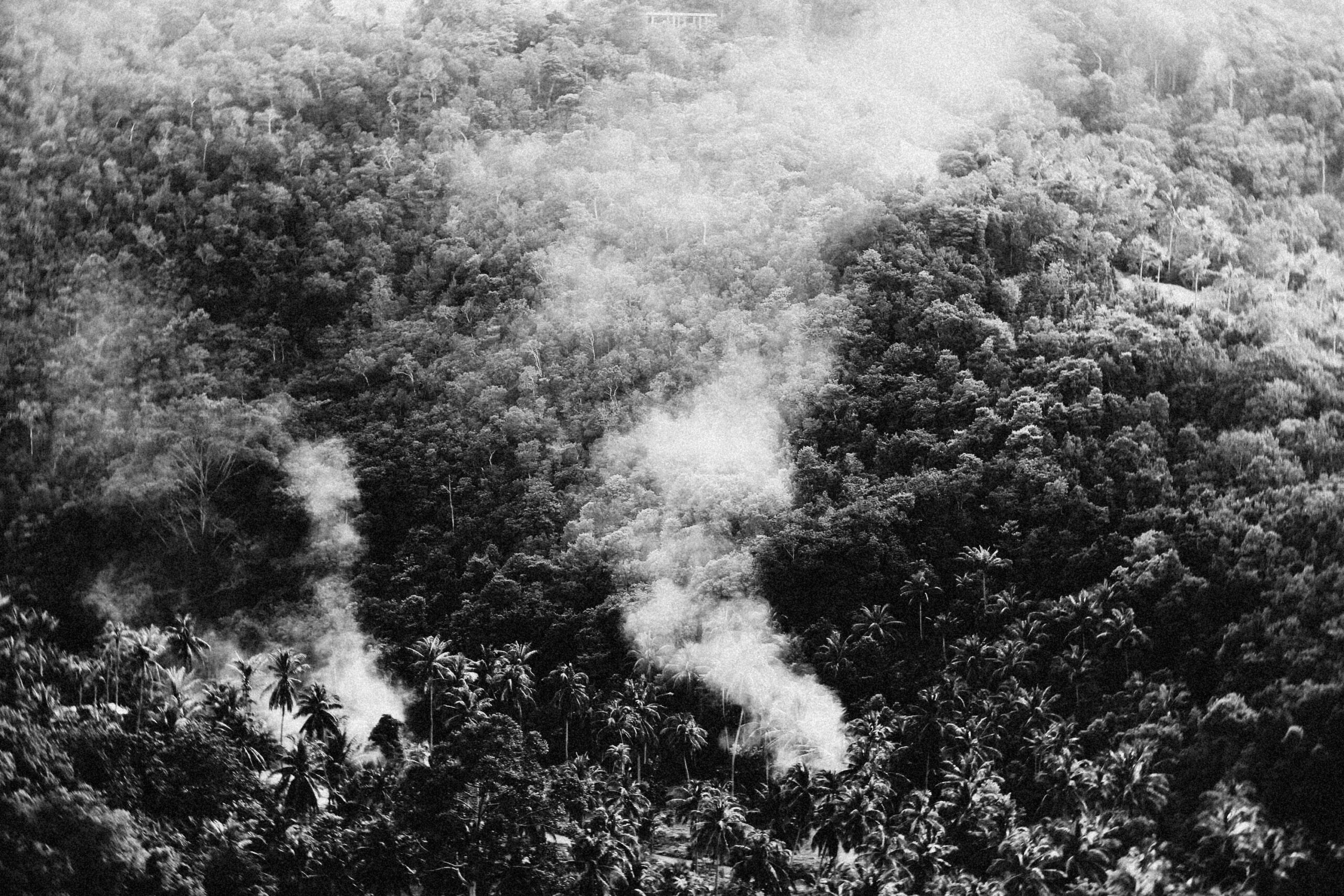
Land-use change stands as one of the most significant drivers of carbon emissions globally, fundamentally reshaping our planet’s carbon trajectories and climate future.

🌍 The Foundation: Understanding Land-Use Change and Carbon Dynamics
The relationship between how we use land and atmospheric carbon concentrations represents one of the most critical environmental challenges of our time. When forests are cleared for agriculture, wetlands are drained for development, or grasslands are converted to cropland, massive amounts of carbon stored in vegetation and soil are released into the atmosphere. This transformation doesn’t just alter landscapes visually—it fundamentally disrupts the planet’s carbon cycle.
Land-use change accounts for approximately 10-15% of global carbon dioxide emissions, making it the second-largest source of anthropogenic greenhouse gas emissions after fossil fuel combustion. However, this percentage can be misleading, as it represents only direct emissions and doesn’t capture the full picture of lost carbon sequestration potential when natural ecosystems are destroyed.
The carbon stored in terrestrial ecosystems is substantial. Forests alone contain approximately 861 gigatons of carbon in their biomass and soil, while grasslands, wetlands, and other natural ecosystems store additional hundreds of gigatons. When these lands are converted, this carbon storage is compromised, often irreversibly within human timescales.
🌳 Deforestation: The Primary Culprit in Carbon Release
Tropical deforestation represents the most dramatic form of land-use change affecting carbon trajectories. The Amazon rainforest, often called the “lungs of the Earth,” has experienced unprecedented rates of deforestation in recent decades, with devastating consequences for global carbon budgets.
When a tropical forest is cleared, several carbon-related processes occur simultaneously. First, the immediate burning or decomposition of biomass releases stored carbon directly into the atmosphere. Second, the rich organic matter in forest soils begins to oxidize when exposed to sunlight and altered moisture conditions, releasing additional CO2. Third, and perhaps most critically, the forest’s capacity to sequester future carbon through photosynthesis is permanently eliminated.
Research indicates that tropical deforestation releases between 1.5 to 2.0 gigatons of carbon annually. This figure is equivalent to the emissions from approximately 400 million cars driven for a year. The impact extends beyond carbon emissions, as deforestation disrupts local and regional rainfall patterns, reduces biodiversity, and eliminates crucial ecosystem services.
Regional Variations in Deforestation Impact
The carbon impact of deforestation varies significantly by region and forest type. Tropical rainforests store substantially more carbon per hectare than temperate or boreal forests, making their conversion particularly damaging. Indonesian peatland forests, for example, store enormous quantities of carbon in their waterlogged soils—when drained and burned for palm oil plantations, they release carbon at rates exceeding most other land-use changes.
Conversely, some regions have experienced reforestation trends. China’s extensive tree-planting programs and natural forest recovery in parts of Europe and North America have created carbon sinks that partially offset emissions elsewhere. However, these gains remain modest compared to ongoing tropical deforestation.
🌾 Agricultural Expansion and Carbon Displacement
Agricultural expansion drives much of the world’s land-use change, as growing populations demand more food, fiber, and biofuels. The conversion of natural ecosystems to farmland represents a fundamental shift in carbon dynamics, often transforming carbon sinks into carbon sources.
Different agricultural systems have vastly different carbon footprints. Industrial monoculture systems typically result in significant carbon losses through soil degradation, reduced organic matter, and high inputs of fossil fuel-derived fertilizers and pesticides. Traditional tillage practices accelerate soil carbon loss by exposing organic matter to oxidation and increasing erosion.
The carbon cost of agricultural land-use change extends beyond the initial conversion. Annual cropping systems maintain much lower carbon stocks than the natural ecosystems they replace. A typical cropland might store 50-100 tons of carbon per hectare, while the forest it replaced might have stored 200-400 tons per hectare or more.
Livestock and Pasture Conversion
Cattle ranching represents another significant driver of land-use change, particularly in Latin America. The conversion of forests to pasture for beef production releases massive carbon quantities while creating a land use that stores relatively little carbon. Pastures typically contain only 10-20% of the carbon that the original forest stored.
Additionally, livestock systems contribute methane emissions, a greenhouse gas 28 times more potent than CO2 over a 100-year timeframe. The combined impact of forest conversion and ongoing livestock emissions makes cattle ranching one of the most carbon-intensive food production systems.
💧 Wetlands, Peatlands, and Hidden Carbon Reserves
Wetlands and peatlands represent some of the planet’s most concentrated carbon stores, yet they’re among the most threatened ecosystems. Despite covering only 3% of Earth’s land surface, peatlands store approximately twice as much carbon as all the world’s forests combined.
When wetlands are drained for agriculture or peat is extracted for fuel or horticulture, these ancient carbon stores are exposed to oxygen, triggering decomposition that can continue for decades or centuries. Indonesian peatland fires in 2015 released more daily carbon emissions than the entire U.S. economy for several weeks.
The drainage of wetlands for urban development represents another concerning trend. As cities expand into floodplains and coastal wetlands, not only is stored carbon released, but crucial natural infrastructure for climate adaptation is destroyed. These ecosystems provide flood protection, water filtration, and biodiversity habitat alongside their carbon storage functions.
🏙️ Urbanization and the Concrete Carbon Question
Urban expansion represents a rapidly growing form of land-use change, particularly in developing nations. While cities occupy relatively small land areas globally, their expansion often occurs on highly productive agricultural land or natural ecosystems near population centers.
The carbon implications of urbanization are complex. On one hand, replacing vegetated landscapes with impervious surfaces eliminates carbon sequestration and releases stored carbon. The production of concrete, steel, and other building materials generates massive CO2 emissions. On the other hand, dense urban development can reduce per-capita emissions through efficient transportation, shared infrastructure, and reduced heating and cooling needs.
Urban forests and green spaces play crucial roles in urban carbon management, but their carbon storage capacity remains limited compared to natural forests. A well-managed urban tree typically stores 0.5-2 tons of carbon, while a forest tree of similar age might store 2-10 tons depending on species and conditions.
📊 Measuring and Monitoring: The Science Behind Carbon Trajectories
Understanding land-use change impacts on carbon trajectories requires sophisticated measurement and monitoring systems. Satellite remote sensing has revolutionized our ability to track deforestation, agricultural expansion, and other land-use changes in near-real-time.
Technologies like LiDAR (Light Detection and Ranging) enable precise measurement of forest biomass and carbon stocks. When combined with ground-based forest inventories and soil carbon measurements, these tools provide comprehensive carbon accounting for different ecosystems and land-use types.
| Ecosystem Type | Carbon Storage (tons CO2e/hectare) | Annual Sequestration (tons CO2e/hectare/year) |
|---|---|---|
| Tropical Rainforest | 800-1,200 | 8-12 |
| Temperate Forest | 400-600 | 4-8 |
| Grassland | 200-300 | 2-4 |
| Cropland | 100-200 | 0-2 |
| Peatland | 1,500-3,000 | 0.5-2 |
These measurements reveal the stark differences in carbon storage capacity across ecosystem types, highlighting why preserving high-carbon ecosystems is crucial for climate stabilization.
🔄 Reversing the Trajectory: Restoration and Regeneration
While land-use change has predominantly increased atmospheric carbon, strategic land management offers significant climate mitigation potential. Reforestation, afforestation, and ecosystem restoration can recapture substantial carbon quantities while providing additional environmental benefits.
Forest landscape restoration initiatives worldwide aim to restore hundreds of millions of hectares of degraded land. The Bonn Challenge, for example, targets 350 million hectares of restoration by 2030. If successful, these efforts could sequester up to 1.7 gigatons of CO2 equivalent annually while improving livelihoods and biodiversity.
Regenerative agriculture practices offer another pathway to reverse carbon trajectories. No-till farming, cover cropping, crop rotation, and integrated livestock management can rebuild soil carbon stocks while maintaining agricultural productivity. Some regenerative farms have demonstrated soil carbon sequestration rates of 0.5-1.5 tons per hectare annually.
The Role of Indigenous Land Management
Indigenous peoples manage or hold tenure rights to approximately 28% of the world’s land surface, including some of the most carbon-dense forests. Research consistently shows that Indigenous-managed forests experience lower deforestation rates and maintain higher carbon stocks than other forest management regimes.
Recognizing Indigenous land rights and supporting traditional management practices represents one of the most cost-effective climate mitigation strategies available. Indigenous fire management, selective harvesting, and agroforestry systems often maintain ecosystem carbon stocks while supporting community livelihoods.
⚖️ Policy Frameworks and Carbon Markets
Addressing land-use change requires robust policy frameworks that account for carbon impacts. REDD+ (Reducing Emissions from Deforestation and Forest Degradation) programs provide financial incentives for forest conservation in developing nations, channeling climate finance toward forest protection.
Carbon markets increasingly incorporate land-use change, allowing forest conservation and restoration projects to generate carbon credits. While controversial, these markets have directed billions of dollars toward conservation projects that might otherwise lack funding. However, ensuring additionality, permanence, and avoiding leakage remain significant challenges.
National policies also play crucial roles. Brazil’s enforcement of forest protection laws significantly reduced Amazon deforestation rates between 2004-2012, avoiding an estimated 3.2 billion tons of CO2 emissions. Unfortunately, weakened enforcement in recent years has reversed many of these gains, demonstrating the importance of sustained political commitment.
🔬 Future Trajectories: Modeling and Projections
Climate models increasingly incorporate land-use change projections to forecast future carbon trajectories. These models suggest that continued business-as-usual land-use change could contribute 100-200 gigatons of additional CO2 emissions by 2100, substantially increasing climate warming.
Conversely, ambitious restoration and conservation scenarios could turn land use into a net carbon sink, potentially offsetting 10-15% of fossil fuel emissions through mid-century. Achieving these positive scenarios requires immediate action, as delays reduce the total carbon sequestration potential due to continued ecosystem degradation.
The interaction between climate change and land-use change creates feedback loops that models are only beginning to capture. Climate-driven forest dieback, permafrost thaw, and increased wildfire frequency could dramatically accelerate carbon releases from terrestrial ecosystems, even without direct land-use change.
🌱 Pathways Forward: Integrating Land-Use and Climate Solutions
Addressing land-use change impacts on carbon trajectories requires integrated approaches that recognize the interconnections between forests, agriculture, energy, and urban systems. Nature-based solutions that protect and restore ecosystems while supporting human development offer promising pathways.
Sustainable intensification of agriculture—producing more food on existing farmland—can reduce pressure for agricultural expansion. Combining improved crop varieties, precision agriculture, and regenerative practices can increase yields while rebuilding soil carbon and reducing chemical inputs.
Urban planning that prioritizes compact development, green infrastructure, and urban forests can minimize the carbon footprint of growing cities. Green building practices using sustainable materials and incorporating living walls and roofs can further reduce urban carbon impacts.
Ultimately, transforming land-use carbon trajectories requires recognizing land as more than just a commodity. Ecosystems provide irreplaceable climate regulation services that markets typically undervalue. Incorporating these carbon and climate services into land-use decisions through payments for ecosystem services, conservation easements, and reformed agricultural subsidies can align economic incentives with climate goals.
🎯 The Urgency of Action: Time-Sensitive Carbon Opportunities
The carbon stored in existing ecosystems represents an irreplaceable climate asset. Once released through land-use change, this carbon takes decades to centuries to recapture through restoration. Every hectare of forest lost today represents not only immediate emissions but also decades of lost sequestration potential.
The next decade represents a critical window for action on land-use change. Current deforestation rates, if continued, will eliminate remaining primary forests in many regions within 50-100 years. Preventing these losses requires immediate policy action, financing, and on-the-ground protection measures.
Individual actions also matter. Consumer choices regarding food, particularly reducing beef consumption and avoiding products linked to deforestation, can reduce demand driving land-use change. Supporting organizations working on forest conservation and Indigenous rights amplifies individual impact.
The challenge of land-use change and carbon trajectories is immense, but solutions exist and are being implemented worldwide. Success requires recognizing that healthy ecosystems provide the foundation for climate stability, human wellbeing, and sustainable development. Protecting and restoring these systems represents not a cost, but an investment in a livable future for all.