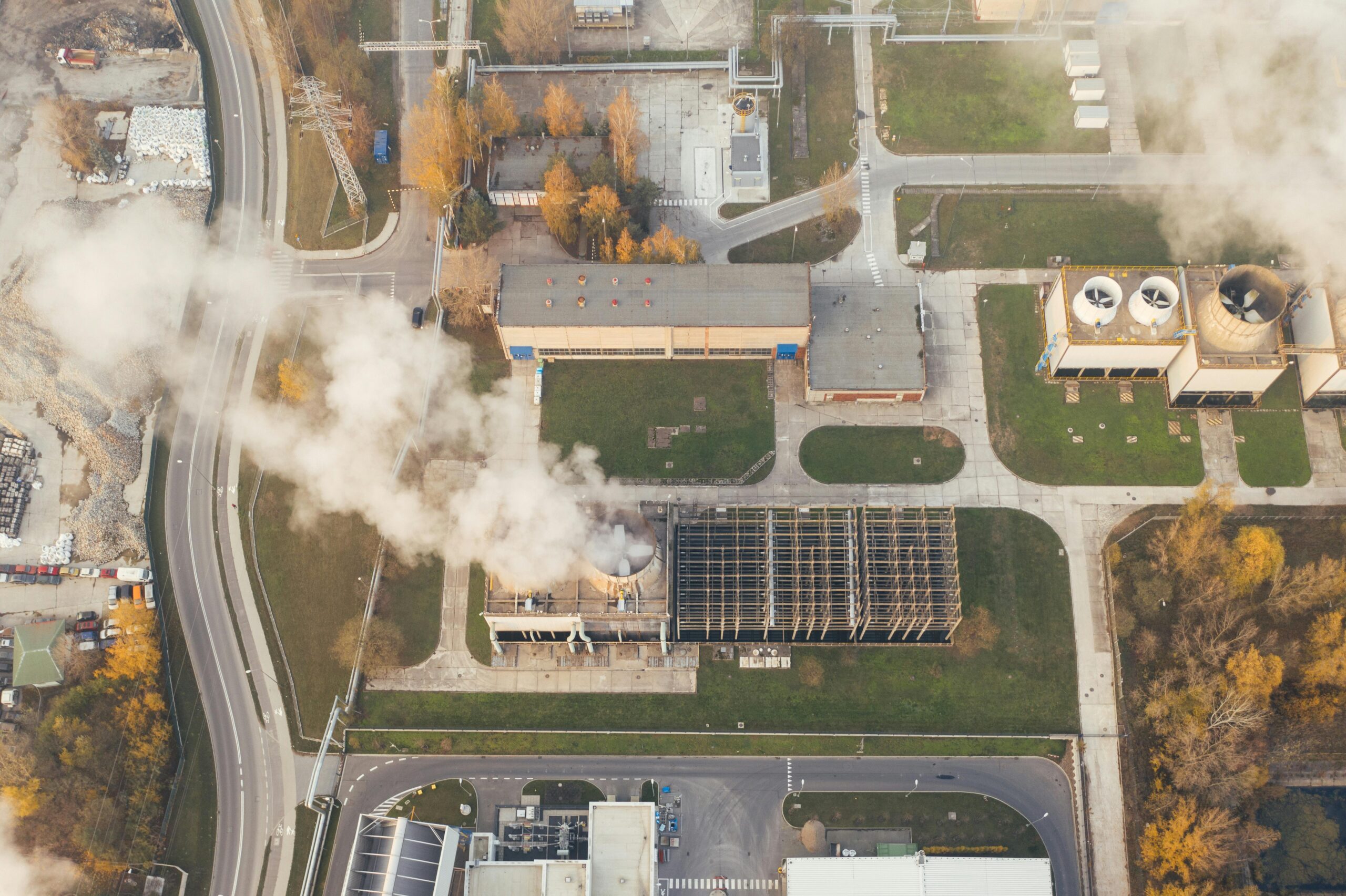
Carbon monitoring programs are reshaping environmental accountability, but they come with complex ethical challenges and equity concerns that demand urgent attention from policymakers, communities, and scientists alike.

🌍 The Rising Stakes of Carbon Accountability
As climate change accelerates, carbon monitoring systems have become essential tools for tracking emissions, verifying reduction commitments, and holding polluters accountable. These sophisticated networks combine satellite imagery, ground sensors, and artificial intelligence to measure greenhouse gas emissions with unprecedented precision. Yet beneath the technical sophistication lies a troubling reality: not all communities benefit equally from these monitoring systems, and some bear disproportionate burdens in their implementation.
The global carbon monitoring infrastructure represents billions of dollars in investment and cutting-edge technology. Major initiatives like NASA’s Orbiting Carbon Observatory, the European Space Agency’s Sentinel satellites, and numerous private sector ventures promise comprehensive planetary surveillance of carbon emissions. However, the distribution of monitoring capabilities, data access, and the resulting benefits reveals stark inequalities that mirror existing global power structures.
Understanding the Ethical Landscape
Carbon monitoring raises fundamental questions about surveillance, sovereignty, and justice. When satellites track emissions over Indigenous territories without consultation, or when monitoring programs focus disproportionately on developing nations while giving less scrutiny to historical polluters, ethical boundaries are crossed. These systems don’t simply measure carbon—they shape policy decisions, influence financial flows, and determine which communities face restrictions on development.
The principle of environmental justice demands that the burdens and benefits of environmental policies be distributed fairly across all populations, regardless of race, ethnicity, or socioeconomic status. Yet carbon monitoring programs often concentrate scrutiny on agricultural practices in developing countries while sophisticated financial mechanisms allow wealthy nations to offset emissions without fundamental systemic changes.
Privacy Concerns in the Age of Atmospheric Surveillance
Modern carbon monitoring technologies can identify emissions from individual facilities, farms, and even neighborhoods. This granular surveillance capability raises legitimate privacy concerns, particularly when commercial entities control the data. Farmers in developing countries may find their practices monitored and judged by distant corporations and governments without meaningful consent or participation in the design of monitoring systems.
The asymmetry of surveillance becomes even more pronounced when considering that many monitoring technologies are developed and controlled by entities in wealthy nations, while the subjects of most intensive monitoring are often communities in the Global South. This digital colonialism in environmental monitoring perpetuates historical patterns of exploitation and control under the guise of climate action.
💡 The Equity Gap in Monitoring Infrastructure
Access to carbon monitoring technology and expertise remains profoundly unequal across regions and communities. Wealthy nations and corporations deploy sophisticated monitoring networks while developing countries often lack even basic capacity to verify emissions within their borders. This technological divide creates information asymmetries that disadvantage those least responsible for historical emissions.
The disparity manifests in multiple dimensions:
- Technological capacity to deploy and maintain monitoring equipment varies dramatically between regions
- Scientific expertise to interpret monitoring data concentrates in wealthy institutions
- Financial resources to participate in carbon markets depend on access to verified monitoring data
- Political influence to shape monitoring standards and protocols favors powerful nations
- Data ownership and access rights typically reside with monitoring entities rather than monitored communities
When Monitoring Becomes Gatekeeping
Carbon monitoring increasingly determines access to climate finance and carbon markets. Communities that cannot afford sophisticated monitoring systems may be excluded from carbon credit schemes, even when they implement effective conservation practices. This creates a perverse situation where those most impacted by climate change and least responsible for emissions face the highest barriers to accessing climate adaptation resources.
Forest communities that have protected carbon-rich ecosystems for generations often cannot prove their conservation efforts without expensive monitoring and verification systems. Meanwhile, corporations can purchase carbon credits from these same forests, profiting from conservation work they didn’t perform, using monitoring systems the original stewards cannot access or control.
The Data Justice Challenge
Who owns atmospheric data? This seemingly abstract question has profound practical implications for equity in carbon monitoring programs. When private companies or foreign governments collect emissions data over sovereign territories, questions of data ownership, access rights, and control become central to justice concerns.
Data colonialism in environmental monitoring replicates historical patterns where resources from the Global South—now including atmospheric data—are extracted, processed elsewhere, and returned as finished products or services that must be purchased. Indigenous communities may discover their traditional territories are being monitored without their knowledge, let alone their free, prior, and informed consent.
Building Capacity for Data Sovereignty
Addressing data justice requires investment in local monitoring capacity, training programs for community scientists, and technology transfer that enables rather than extracts. Several initiatives are emerging that prioritize community-led monitoring, though they remain vastly underfunded compared to top-down surveillance systems.
Successful models include participatory monitoring programs where communities operate equipment, interpret data, and control how information is shared. These approaches recognize local knowledge and integrate traditional environmental observations with technological monitoring, creating more comprehensive and contextually appropriate assessment systems.
🔍 Verification Standards and Their Hidden Biases
The protocols and standards that govern carbon monitoring are not neutral technical specifications—they embed particular worldviews, economic assumptions, and power relationships. Current verification standards were largely developed by institutions in wealthy nations and often fail to account for diverse ecosystems, traditional land management practices, or the socioeconomic contexts of developing regions.
These standards can inadvertently disadvantage certain practices and communities. For example, monitoring protocols designed for industrial forestry may not accurately assess carbon sequestration in agroforestry systems or traditional Indigenous land management. This technical bias has real economic consequences, excluding sustainable practices from carbon markets simply because they don’t fit predetermined measurement frameworks.
The Cost of Compliance
Meeting international monitoring standards often requires expensive equipment, specialized training, and ongoing verification by accredited third parties. These costs create insurmountable barriers for small landholders and poor communities, effectively limiting participation in carbon markets to large landowners and well-funded organizations.
The verification industry itself has become a lucrative sector, with consulting firms charging substantial fees for services that resource-poor communities cannot afford. This creates a extractive relationship where the mechanisms designed to address climate change become another avenue for transferring wealth from vulnerable communities to established professional services firms.
Historical Responsibility and Monitoring Priorities
A fundamental equity issue in carbon monitoring concerns how programs allocate attention and resources. Developed nations, responsible for the majority of cumulative historical emissions, often avoid the same level of scrutiny directed at developing countries, where current emissions are primarily driven by basic development needs rather than luxury consumption.
The ethical principle of common but differentiated responsibilities recognizes that nations have varying capacities and historical contributions to climate change. Yet monitoring programs don’t always reflect this principle. Satellite systems may track deforestation in the Amazon with extraordinary detail while industrial emissions from legacy polluters receive less intensive monitoring or face weaker enforcement mechanisms.
Rebalancing the Monitoring Equation
Justice demands that monitoring intensity and associated restrictions correspond to historical responsibility and current capacity. This doesn’t mean ignoring emissions in developing countries, but rather ensuring that monitoring programs don’t become tools for restricting legitimate development while failing to address consumption patterns in wealthy nations.
Progressive monitoring frameworks would intensify scrutiny on luxury emissions—private jets, excessive consumption, and unnecessary industrial production—while providing technical support rather than punitive oversight for communities pursuing basic development needs. This reorientation would align monitoring priorities with ethical principles of climate justice.
🤝 Toward Participatory Monitoring Models
The pathway toward ethical and equitable carbon monitoring requires fundamentally restructuring how programs are designed, implemented, and governed. Participatory approaches that center affected communities in decision-making processes offer promising alternatives to top-down surveillance models.
Key elements of participatory monitoring include:
- Community involvement from program design through data interpretation
- Capacity building that transfers skills and technology rather than creating dependencies
- Transparent data sharing with communities having access to information collected about their territories
- Benefit-sharing arrangements ensuring communities profit from monitoring activities
- Integration of traditional knowledge with technological monitoring systems
- Governance structures that give monitored communities meaningful decision-making power
Success Stories and Scalable Solutions
Several initiatives demonstrate that equitable monitoring is possible. In parts of the Amazon, Indigenous communities operate their own monitoring systems using drones and smartphone applications, combining traditional forest knowledge with technology. These programs provide more accurate assessments than remote sensing alone while strengthening community governance over territories.
In East Africa, smallholder farmer cooperatives have developed peer-to-peer verification systems that reduce costs while building local expertise. These grassroots monitoring networks challenge the assumption that only expensive, expert-driven systems can provide reliable data, demonstrating that appropriate technology combined with community engagement can achieve robust results.
Reforming Governance for Accountability
Addressing ethical and equity concerns requires governance reforms at multiple levels. International monitoring standards need revision through inclusive processes that incorporate diverse perspectives and recognize varied contexts. National governments must assert data sovereignty while building domestic monitoring capacity rather than depending entirely on foreign systems.
Oversight mechanisms should ensure that monitoring programs respect human rights, including rights to privacy, self-determination, and free, prior, and informed consent. Independent ombudsmen or community advocate positions within monitoring organizations could provide channels for addressing grievances and ensuring accountability to affected populations.
The Role of Multilateral Frameworks
International agreements like the Paris Climate Accord establish expectations for emissions monitoring and reporting. However, these frameworks must evolve to explicitly address equity concerns, providing financial and technical support for monitoring capacity in developing countries while ensuring that enhanced transparency doesn’t become a tool for restricting legitimate development aspirations.
Climate finance mechanisms should prioritize investments in locally-controlled monitoring infrastructure. Rather than funding satellite surveillance systems controlled by external entities, resources should flow toward building regional and community-scale monitoring capabilities that serve local needs while contributing to global climate goals.
🌱 Designing Justice into Monitoring Systems
Technical design choices in monitoring systems are never purely technical—they reflect and reinforce particular values and power relationships. Building equity into carbon monitoring requires conscious design decisions that prioritize accessibility, transparency, and community benefit.
Open-source technologies, low-cost sensors, and user-friendly interfaces can democratize monitoring capabilities. When communities can access affordable tools and understand the data being collected about their environment, power dynamics shift. Technical complexity should not become a barrier that excludes those most affected by monitoring programs.
Future Directions and Emerging Technologies
Emerging technologies offer both opportunities and risks for equity in carbon monitoring. Artificial intelligence and machine learning can process vast amounts of atmospheric data, but algorithms trained primarily on conditions in wealthy nations may perform poorly elsewhere. Blockchain technologies promise transparent tracking of carbon credits but could also entrench existing inequalities if access remains unequal.
The development trajectory of monitoring technologies will significantly influence future equity outcomes. Investments in appropriate technology designed with and for diverse communities, rather than exclusively high-tech solutions developed in elite research institutions, will determine whether next-generation monitoring systems exacerbate or alleviate current injustices.

Moving Forward with Ethical Clarity
Carbon monitoring programs stand at a crossroads. They can evolve into tools for genuine climate justice, empowering communities and ensuring accountability from the greatest polluters. Or they can become sophisticated surveillance systems that entrench existing inequalities under the banner of environmental protection. The choice depends on deliberate decisions made now about program design, governance, and resource allocation.
Achieving balance between effective monitoring and ethical implementation requires ongoing dialogue among diverse stakeholders, willingness to challenge established power structures, and commitment to centering justice in climate action. Technical excellence in measuring carbon must be matched by moral seriousness in addressing the equity implications of how monitoring systems are deployed and controlled.
The climate crisis demands urgent action, but urgency cannot justify perpetuating injustice. Monitoring programs that fail to address ethical and equity concerns will ultimately undermine climate goals by eroding trust, excluding crucial stakeholders, and focusing scrutiny on the wrong targets. Only through inclusive, participatory, and justice-centered approaches can carbon monitoring fulfill its potential as a tool for genuine climate progress that benefits all communities and ecosystems.