People ask me which I prefer — cities, beaches, or mountains — as if I'm meant to have a team. I don't. After enough years of this, I've learned that the question isn't which one is best. It's which one fits the person you'll be when you step off the plane, tired or wired, craving stimulation or starving for stillness.
Each of these trips does something completely different to a nervous system. Choose the wrong one for your mood and even a beautiful place will feel slightly off, like a song in the wrong key. So let's be honest about what each actually gives you, and what it quietly takes.
What a city gives, and what it costs#
A city is a stimulant. It floods you — sound, light, food, strangers, the low electric hum of everyone going somewhere. When you're hungry for aliveness, nothing beats it. You can be anonymous and surrounded at the same time, which is its own strange comfort. You eat well, you walk far, you stumble into things you'd never have planned.
But cities rarely rest you. They reward curiosity and punish exhaustion. The same density that thrills you on day one can fray you by day four — the queues, the noise, the small ongoing negotiation of crowds. If you arrive depleted, a city tends to spend the little energy you had left rather than refill it.
The trade is clear once you name it: maximum stimulation, minimum recovery. Go to a city to feel more, not to feel better.
What a beach is really for#
The beach is the undisputed master of doing nothing, and doing nothing is harder and rarer than we admit. There's a reason the body softens near water. The horizon gives the eyes somewhere endless to rest. Days lose their edges. You read half a book and call it an achievement.
That gift is also the catch. A beach only works if nothing is genuinely what you need. If you're restless, or running from a feeling you haven't sat with, the stillness won't soothe you — it'll amplify the noise inside, because there's nothing left to drown it out. I've watched busy people unravel slightly on day three of paradise, ambushed by their own thoughts with no city to distract them.
A beach won't fix restlessness; it removes the distractions you were using to avoid it. Bring peace, and the coast will multiply it. Bring chaos, and it has nowhere to go but inward.
So go to the coast when you actually want less. Less doing, less deciding, less of everything. If part of you suspects you'd be bored, listen to that part — boredom at the beach isn't a flaw in the place, it's a signal that you came for the wrong reason. The coast can't entertain you; it can only let you be still. Bring that intention with you, or bring it nowhere.
What the mountains ask of you#
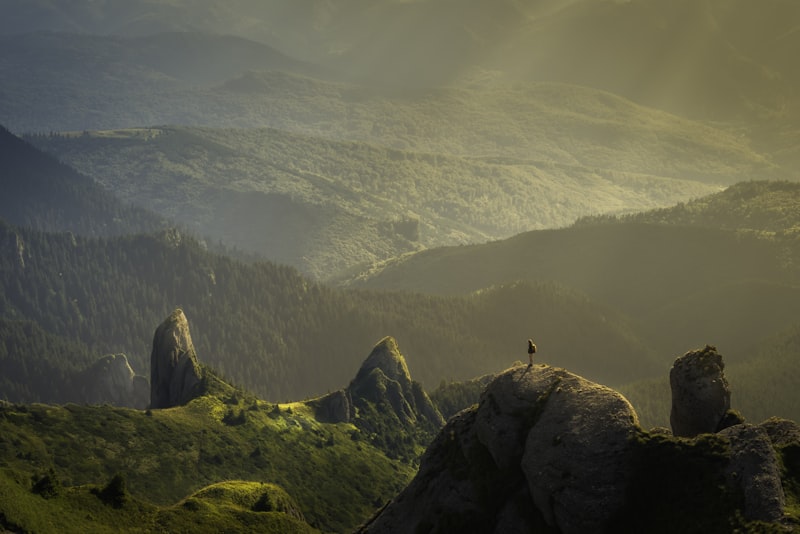
Mountains are the one that asks for something up front. They want a little effort — a walk, a climb, an early start, a willingness to be slightly cold or slightly out of breath. In return they offer the rarest thing on this list: genuine quiet and a sense of scale that resets your sense of proportion. Problems shrink at altitude. They just do.
It's a different kind of rest than the beach gives. Not the rest of stillness but the rest of effort with no audience — your body busy, your mind finally allowed to wander. You sleep differently after a day outdoors. You eat like you've earned it, because you have.
The cost is comfort and convenience. Mountain trips reward preparation and punish the assumption that everything will be easy or close by. The payoff, though, is the kind of memory that stays vivid for years.
Matching the trip to the mood#
Here's the part nobody tells you: the right answer changes every few months, because you change. The trip you need this season may be the opposite of the one you needed last. A rough quarter calls for a beach; a flat, listless one calls for a city to wake you up; a noisy, overstretched one calls for a mountain to quiet you down.
A few honest prompts before you decide:
- If you imagine the trip and feel relief, you probably want the beach.
- If you imagine it and feel a spark of curiosity, you probably want the city.
- If you imagine it and feel a steadying breath, you probably want the mountains.
- If you can't tell, you're likely more tired than you think — and tired usually wants stillness, not stimulation.
There's no rule against mixing them, either. Some of my best trips put a couple of city days at the front, then dissolved into coast or hills once the curiosity was satisfied and the body was ready to rest. Sequence matters: stimulation first, recovery second, almost always feels better than the reverse.
A quiet word on the practical stuff#
Whichever you choose, the homework is the same and it isn't optional. Entry rules, health and vaccination requirements, weather patterns, and local safety conditions shift constantly and depend on your nationality and the season — a mountain region in storm season and a coast in cyclone season are different propositions entirely. Check official travel advisories, the relevant embassy or consulate, your airline, and the official tourism resources before you book, talk to a travel clinic about any health needs, and carry insurance that suits the kind of trip you're taking. Nothing here replaces those sources.
So which one?#
Stop trying to pick the best. There is no best — there's only the best fit for the state you're in. Cities for hunger, beaches for emptiness, mountains for noise that needs quieting. Read your own mood honestly, choose the trip that answers it, and you'll find that the place was never really the point. The point was always how it left you when you came home.